
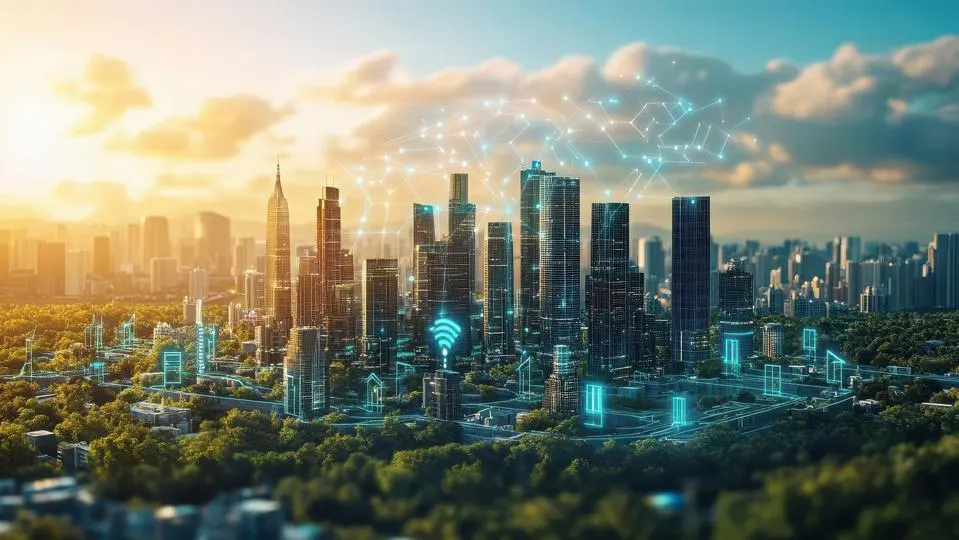
The rapid evolution of technology is reshaping human existence, from the way we live in urban environments to how we explore the cosmos. The convergence of artificial intelligence, renewable energy, advanced robotics, and space technologies is paving the way for a future that once seemed confined to science fiction. This article explores the transformative potential of smart cities and space exploration, two pillars of technological innovation that promise to redefine humanity’s trajectory.
Smart Cities: Redefining Urban Living
Smart cities leverage cutting-edge technologies to enhance the quality of life, optimize resources, and promote sustainability. By integrating the Internet of Things (IoT), artificial intelligence (AI), and big data analytics, these urban ecosystems aim to address challenges like overpopulation, traffic congestion, and environmental degradation.
The Building Blocks of Smart Cities
At the core of smart cities are interconnected systems that collect and analyze data in real time. Sensors embedded in infrastructure—roads, buildings, and utilities—monitor everything from traffic flow to energy consumption. For instance, Singapore’s Smart Nation initiative uses IoT to optimize public transportation, reducing commute times by up to 15% through predictive analytics. Similarly, cities like Amsterdam employ smart grids to balance energy distribution, cutting waste and promoting renewable energy adoption.
AI plays a pivotal role in processing this data, enabling cities to make dynamic decisions. Machine learning algorithms predict traffic patterns, optimize waste collection, and even enhance public safety by analyzing crime data. In Toronto, Sidewalk Labs’ smart city project integrates AI to create adaptive urban spaces that respond to residents’ needs in real time.
Challenges and Opportunities
While the promise of smart cities is immense, challenges remain. Privacy concerns arise from constant data collection, with citizens wary of surveillance. Cybersecurity is another hurdle, as interconnected systems are vulnerable to hacking. Moreover, the high cost of implementation can exclude developing nations, widening global inequalities.
Yet, the opportunities outweigh the challenges. Smart cities can reduce carbon emissions by up to 20%, according to a 2023 McKinsey report, by optimizing energy use and promoting electric vehicles. They also foster inclusivity through accessible public services, such as real-time transit updates for people with disabilities. As technology advances, the scalability of smart city solutions will make them more affordable, enabling global adoption.
Space Exploration: Humanity’s Next Frontier
While smart cities transform life on Earth, space exploration is expanding humanity’s reach beyond our planet. Advancements in propulsion systems, reusable rockets, and AI-driven spacecraft are making interplanetary travel and colonization more feasible than ever.
The New Space Race
The 21st century has witnessed a revitalized space race, driven by private companies like SpaceX, Blue Origin, and international collaborations. SpaceX’s Starship, a fully reusable rocket, has slashed launch costs by 30% compared to traditional systems, enabling frequent missions to the Moon and Mars. In 2024, NASA’s Artemis program successfully landed autonomous rovers on the lunar surface, paving the way for a permanent human presence by 2030.
AI is revolutionizing space exploration by enabling autonomous navigation and data analysis. For example, NASA’s Perseverance rover uses AI to identify geological features on Mars, reducing the need for human intervention. Meanwhile, quantum computing advancements are accelerating simulations of extraterrestrial environments, aiding mission planning.
The Path to Colonization
The dream of colonizing Mars is closer to reality, with SpaceX targeting crewed missions by 2030. Technologies like 3D-printed habitats, hydroponic farming, and water recycling systems are being developed to sustain life in harsh extraterrestrial environments. Beyond Mars, the discovery of exoplanets in habitable zones has sparked interest in interstellar exploration, with projects like Breakthrough Starshot aiming to send probes to Alpha Centauri by 2050.
However, space exploration faces significant hurdles. The cost of interplanetary missions remains astronomical, and ethical questions about planetary protection and resource exploitation persist. Radiation exposure and long-term human health in space are also unresolved challenges. Despite these obstacles, the potential for scientific discovery and humanity’s survival as a multi-planetary species drives relentless innovation.
Bridging Earth and Space: Synergies in Technology
The technologies powering smart cities and space exploration are deeply interconnected. AI and IoT systems used in urban planning are also critical for managing resources in space habitats. Renewable energy solutions, like solar panels optimized for cities, are being adapted for extraterrestrial outposts. Furthermore, advancements in materials science—such as lightweight, durable composites—are benefiting both urban infrastructure and spacecraft design.
For instance, graphene-based materials, which are 200 times stronger than steel, are being used in smart city construction and space station modules. Similarly, autonomous drones used for urban delivery systems are being repurposed for planetary exploration, capable of navigating rugged terrains on Mars or the Moon.
The Future Awaits
The convergence of smart cities and space exploration represents a bold leap toward a future where technology enhances life on Earth and beyond. Smart cities promise sustainable, efficient urban living, while space exploration opens doors to new worlds. Together, they embody humanity’s drive to innovate, adapt, and thrive in an ever-changing universe.
As we move toward 2030 and beyond, the synergy between these fields will redefine what it means to be human. By addressing challenges like privacy, cost, and ethical concerns, we can ensure that technology’s bold future benefits all of humanity, from the streets of smart cities to the stars above.
FAQs
What is a smart city?
A smart city uses advanced technologies like IoT, AI, and big data to optimize urban systems, improve sustainability, and enhance residents’ quality of life.
How do smart cities address environmental concerns?
Smart cities reduce carbon emissions through energy-efficient systems, smart grids, and electric vehicle infrastructure, potentially cutting emissions by up to 20%.
What are the main challenges in developing smart cities?
Key challenges include privacy concerns, cybersecurity risks, high implementation costs, and ensuring equitable access across regions.
How is AI used in space exploration?
AI enables autonomous navigation, data analysis, and mission planning in spacecraft and rovers, reducing human intervention and improving efficiency.
What is the timeline for Mars colonization?
Companies like SpaceX aim for crewed Mars missions by 2030, with technologies like 3D-printed habitats and hydroponic farming supporting long-term colonization.
How do smart city technologies apply to space exploration?
Technologies like AI, IoT, and renewable energy systems used in smart cities are adapted for resource management and habitat design in space environments.